

E-bike speed settings for seniors are the single most important factor in making electric bike riding safe, comfortable, and enjoyable. The industry term for this is “pedal-assist level management,” and it covers everything from choosing the right e-bike class to adjusting your controller’s maximum speed parameter. Get these settings right, and you ride with confidence. Get them wrong, and a sudden surge of power can throw off your balance in seconds. This guide walks you through every setting that matters, in plain language, so you can ride on your own terms.
The three settings that matter most are assist level, maximum speed cap, and throttle access. These work together to control how much power the motor delivers and how fast the bike can go. Most modern e-bikes let you adjust all three through a handlebar display or controller menu. Understanding each one gives you full control over your ride.
U.S. federal law divides e-bikes into three classes, and each class sets a hard cap on motor-assisted speed:
For most seniors, Class 1 or Class 2 is the right starting point. Twenty miles per hour is already fast enough to feel exhilarating. Class 3 speeds require sharper reflexes and longer stopping distances, which raises the risk level for riders who are still building confidence.
Pro Tip: If you plan to ride on local trails or bike paths, choose a Class 1 e-bike or set it to ride like one. It has the fewest access restrictions and the most predictable power delivery.
Most e-bike controllers let you set a maximum speed through a parameter menu. The process is straightforward, but you must follow each step carefully:
One critical warning: incorrect wheel size or sensor calibration causes your display to show the wrong speed. If your wheel diameter is entered incorrectly in the controller, your actual speed may be higher than the number on screen. Always verify your wheel size setting matches your tire before adjusting speed limits.
Pro Tip: For the first 50 miles on a new e-bike, limit your speed to 60–70% of the bike’s maximum. This protects the motor and battery while you get comfortable with how the bike handles.
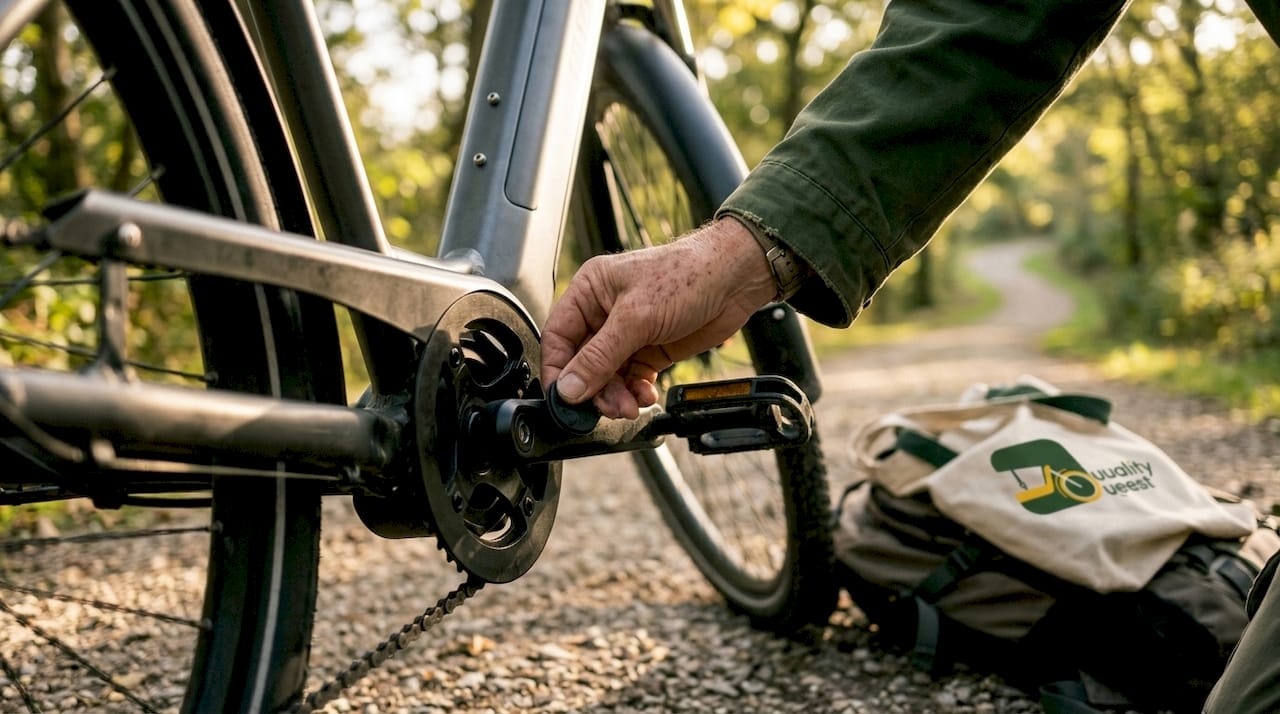
The type of pedal-assist sensor your e-bike uses changes how the power feels under your feet. Torque sensors respond to pedaling force, delivering power proportional to how hard you push. Cadence sensors simply detect whether the pedals are turning and apply a fixed power level. The difference in feel is significant.
Cadence sensors can produce a sudden lurch when you start pedaling. Torque sensors feel smooth and natural, more like riding a regular bike with a helpful tailwind. For seniors, that smoothness reduces the risk of losing balance at startup or in slow turns. The ENGWE LE20 step-thru is one example of a bike that uses a torque sensor combined with a low step-through frame, making it a strong option for older riders.
Older riders consistently prefer torque sensor e-bikes because the power delivery is easier to predict and manage. That preference is backed by real riding experience, not just spec sheets.
Pro Tip: Start every ride on assist level 1 or 2. You can always increase the assist if you need more help on a hill. Starting low keeps your speed predictable from the first pedal stroke.
Speed control is not just about numbers on a display. The physical design of your e-bike plays a major role in how well you manage speed at any given moment.
Not every e-bike is built for slow, controlled riding. When you shop for a senior-friendly model, these are the features worth prioritizing:
The PUCKIPUPPY – Husky Plus E-Trike 750W 15 MPH is a strong example of a slow-speed, high-comfort option. Its recumbent seating position reduces back strain, and its dual motors give smooth, predictable power at any assist level.
Local laws vary widely on e-bike speed limits, trail access, and age requirements. California, for example, restricts Class 3 e-bike use to riders 16 and older and requires helmets. Other states have their own rules that affect where you can ride and how fast.
Before you set your maximum speed, check these three things:
Riding a Class 3 e-bike on a trail posted for Class 1 only can result in a fine. More importantly, it puts you and other trail users at risk. Keeping your speed setting within your class limit is both a legal and a safety decision.
The best e-bike speed settings for seniors combine a low assist level, a reduced max speed cap, and a torque sensor system to deliver smooth, predictable power that builds confidence on every ride.

Most riders I talk to make the same mistake when they start: they leave the factory speed settings untouched and assume the bike will feel manageable. It usually does not. A Class 2 e-bike set to its full 20 mph limit with a cadence sensor can feel aggressive and unpredictable, especially in the first few weeks.
The riders who build confidence fastest are the ones who drop their max speed to 12 mph on day one and spend two weeks just getting used to how the bike starts, stops, and corners. Then they raise it to 15 mph. Then 18 mph if they want. That gradual approach works every time.
The other thing I push hard on is braking. Speed settings matter, but your ability to stop matters more. If you are riding above 10 mph and your bike has rim brakes, upgrade to disc brakes before you touch the speed settings. Stopping distance at 15 mph on rim brakes is longer than most people expect.
Ride at the speed that feels comfortable to you, not the speed the bike is capable of. The motor is there to help you, not to rush you.
— Matt
Quality Quest Bikes carries a curated selection of e-bikes and trikes built with senior riders in mind. Every model in our lineup is chosen for comfort, control, and real-world usability.
Whether you want a stable three-wheel ride or a step-through two-wheeler with a torque sensor, we have options that match your pace and your local terrain. The Lift Caddy and the EMOJO Dexter Electric Trike are two of our most popular picks for seniors who want a safe, comfortable ride at moderate speeds. Fast and free shipping, no hidden costs, and personalized support from our team. Browse our full selection today and find the ride that fits your life.
Most seniors ride comfortably and safely at 10–15 mph. Setting your controller’s max speed to this range gives you enough assist for hills while keeping stopping distances short and manageable.
Most e-bikes with a programmable controller allow you to lower the max speed through a parameter menu, often labeled P08. Check your owner’s manual to confirm your model supports this feature before purchasing.
Class 1 is the best starting point for most seniors. It caps motor assistance at 20 mph, requires no throttle, and is permitted on the widest range of trails and bike paths across the U.S.
Yes. Torque sensors deliver power based on how hard you pedal, which eliminates the sudden lurching common with cadence sensors. That smoother power delivery reduces the risk of losing balance, especially at low speeds.
State and local rules vary on e-bike class access and age requirements. California restricts Class 3 to riders 16 and older, and many trail systems only allow Class 1. Always verify your local rules before adjusting your speed above the Class 1 limit.



You deserve quality products at fair prices. Period.
Which is why we offer no sales tax and price matching
Orders include free shipping and are dispatched within 1 -2 business days.
Exceptions apply.

We want you to be enthusiastically satisfied with your order, have any questions?
Your support keeps our wheels rolling!
We’re more than just a store — we’re part of a growing local community of utility bike and trike enthusiasts who are passionate about creating positive change.
Subscribe and be the first to learn about our news and promotions

Your cart is empty