

Pedal assist is defined as a motor system on electric bikes that activates only when you pedal, adding power to your effort rather than replacing it. The industry term for this is PAS, short for Pedal Assist System. Unlike a throttle, which can run the motor independently, PAS requires pedaling to engage. The result is a ride that feels like cycling, just with a tailwind that never quits. Whether you are commuting across town, hauling cargo, or tackling a hilly trail, understanding pedal assist technology changes how you shop for and ride an e-bike.
A PAS uses sensors, a controller, a motor, and a battery working together to detect your pedaling and deliver the right amount of motor power. The system reads your input and responds in real time. That integration is what separates a well-tuned e-bike from one that feels jerky or unresponsive.
The two main sensor types are cadence sensors and torque sensors. Each creates a very different riding experience:
Pro Tip: If you want the most natural ride feel, prioritize a torque sensor over a cadence sensor when shopping. The difference is immediately noticeable on hills and during acceleration.
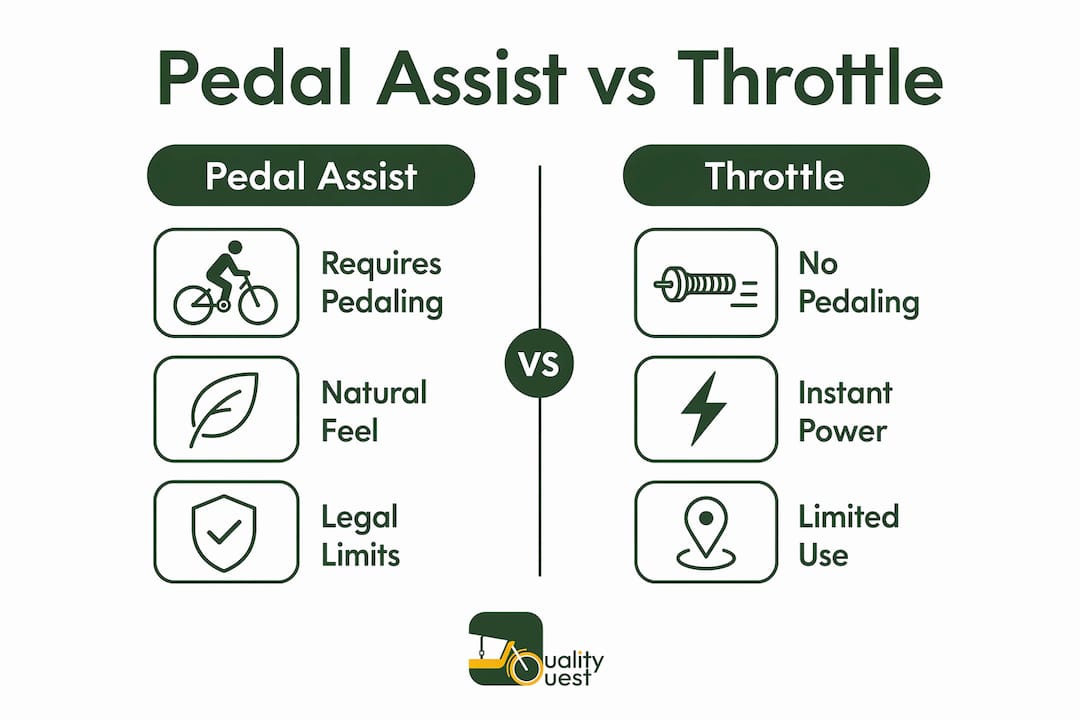
Pedal assist and throttle are the two main ways an e-bike motor can be controlled, and they serve different riders in different situations. Throttle systems engage motor power without any pedaling required, similar to a scooter or motorcycle. PAS requires you to pedal to activate the motor.
Here is how the two systems compare across the factors that matter most to everyday riders:
Most quality e-bikes today offer both systems. You get the natural feel of PAS for everyday riding and the option to use throttle when you need a break.
Legal classifications directly affect how fast your motor will assist you and where you can legally ride. Knowing the rules before you buy saves real headaches later.
In Europe and the UK, the pedelec standard sets clear limits: motor assistance is only permitted while pedaling, maximum motor power is 250W, and the assist cuts off at approximately 25 km/h (15.5 mph). Bikes meeting this standard are treated as bicycles under the law, with no license or registration required.
North America uses a class system that works differently:
Speed limits shape the entire riding experience. A Class 3 e-bike feels noticeably faster and more capable on a commute than a Class 1 model. The motor simply keeps assisting longer before cutting out. Bikes that exceed these thresholds, sometimes called speed pedelecs, cross into moped or motorcycle territory and require registration, insurance, and often a license. Always check your local regulations before purchasing.
The benefits of pedal assist go beyond convenience. PAS encourages more consistent exercise by keeping you pedaling while reducing the fatigue that stops most people from riding regularly. That is a meaningful difference for commuters who want to arrive at work without being soaked in sweat, or for casual riders who want to go farther without dreading the hills on the way back.
Here is what PAS delivers in real riding situations:
Pro Tip: On a long commute, start at assist level 2 on flat sections and bump to level 4 or 5 only on climbs. You can easily add 20–30% more range with this habit alone.
Pedal assist is the defining technology that makes e-bikes feel like bicycles rather than scooters, and choosing the right sensor type and legal class determines how well it fits your riding life.
| Point | Details |
|---|---|
| PAS requires pedaling | The motor only activates when you pedal, keeping the ride natural and bicycle-like. |
| Torque sensors feel better | Torque sensors deliver proportional power; cadence sensors behave more like on/off switches. |
| Legal class matters | Class 1 tops out at 20 mph assist; Class 3 extends to 28 mph with different trail access rules. |
| PAS supports exercise | Pedal assist reduces fatigue without eliminating effort, making longer and more frequent rides realistic. |
| Manage assist levels for range | Using lower assist on flat terrain and higher assist on hills extends battery life noticeably. |
Most riders shopping for their first e-bike focus on motor wattage and battery size. I get it. Those numbers are easy to compare on a spec sheet. But after spending time on both cadence-sensor and torque-sensor bikes, I can tell you the sensor type matters more to your daily experience than either of those figures.
On a cadence-sensor bike, there is always a slight lag between when you start pedaling and when the motor responds. On a torque-sensor bike like the ENGWE LE20 with its torque sensor, the motor responds to your effort almost instantly. It feels like the bike is reading your mind. That difference is what makes some riders fall in love with e-bikes and others feel like they bought an expensive disappointment.
The other thing riders consistently get wrong is assist level management. Most people set it to maximum and leave it there. That burns through the battery fast and actually reduces the workout benefit. I ride at level 2 for most of my commute and only push to level 4 on climbs. The battery lasts longer, and I still feel like I did something physical by the time I arrive.
— Matt
Ready to put pedal assist to work in your daily life? Qualityquestbikes carries a curated selection of e-bikes and e-trikes built around real-world use, from cargo hauling to casual commuting.
The ECOTRIC Electric Tricycle runs a 750W motor with pedal assist and tops out at 26 mph, making it a strong pick for riders who want stability and power in one package. For riders who want a foldable option with serious performance, the ENGWE EP-2 Pro delivers 960W and 26 mph with full PAS support. Every model at Qualityquestbikes ships free with no hidden costs. Browse the full commuter e-bike collection to find the right fit for your route.
Pedal assist means the motor only activates when you pedal, adding power to your effort rather than replacing it. The industry term is PAS, or Pedal Assist System.
Cadence sensors detect whether the pedals are turning and switch the motor on or off accordingly. Torque sensors measure how hard you push and deliver proportional motor power for a smoother, more natural feel.
No. Pedal assist requires you to pedal to engage the motor. A throttle activates the motor independently of pedaling, similar to a scooter.
In the US, Class 1 and Class 2 e-bikes cut motor assist at 20 mph. Class 3 e-bikes cut off at 28 mph. European pedelecs cut off at approximately 15.5 mph (25 km/h).
Yes. Pedal assist reduces fatigue on hills and longer routes while keeping you physically active, making it practical for daily commutes without arriving exhausted.



You deserve quality products at fair prices. Period.
Which is why we offer no sales tax and price matching
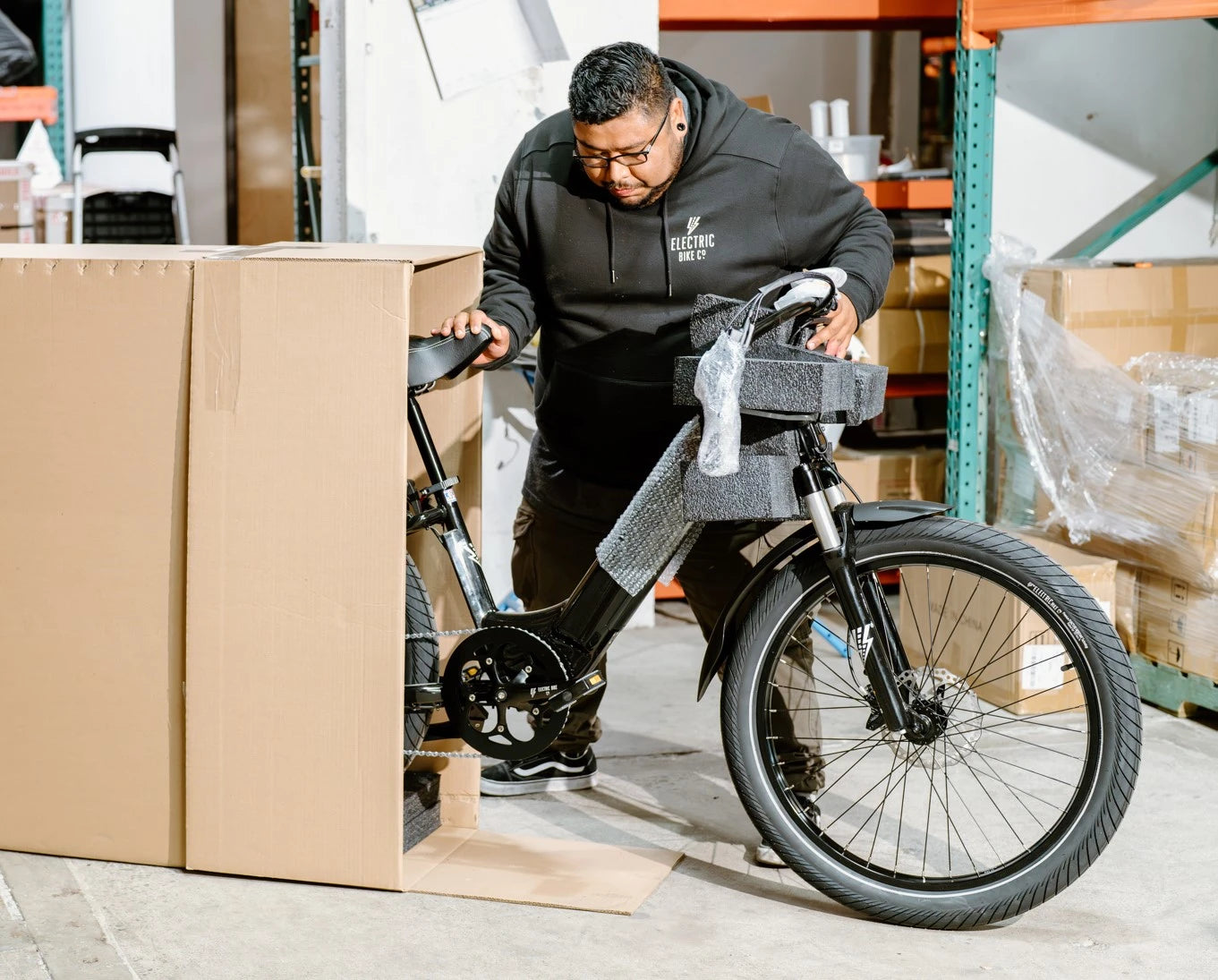
Orders include free shipping and are dispatched within 1 -2 business days.
Exceptions apply.

We want you to be enthusiastically satisfied with your order, have any questions?
Your support keeps our wheels rolling!
We’re more than just a store — we’re part of a growing local community of utility bike and trike enthusiasts who are passionate about creating positive change.
Subscribe and be the first to learn about our news and promotions

Your cart is empty