

An electric trike is defined as a three-wheeled vehicle powered by an electric motor, combining the stability of a tricycle with the assisted propulsion of modern e-bike technology. Also called an electric tricycle, this vehicle comes in two main configurations: the delta layout (one wheel in front, two in the rear) and the tadpole layout (two wheels in front, one in the rear). Electric trikes have surged in popularity among commuters, seniors, cargo haulers, and outdoor riders who want practical, eco-friendly transportation without the balance demands of a two-wheel bike.
Electric trikes share many components with standard e-bikes but are built around a three-wheel frame that prioritizes stability and load capacity. Understanding what goes into one helps you shop smarter.
Motor and power: Most consumer electric trikes use hub motors mounted in the rear wheel, typically ranging from 250W to 750W. Higher wattage means more torque for hills and heavier loads.
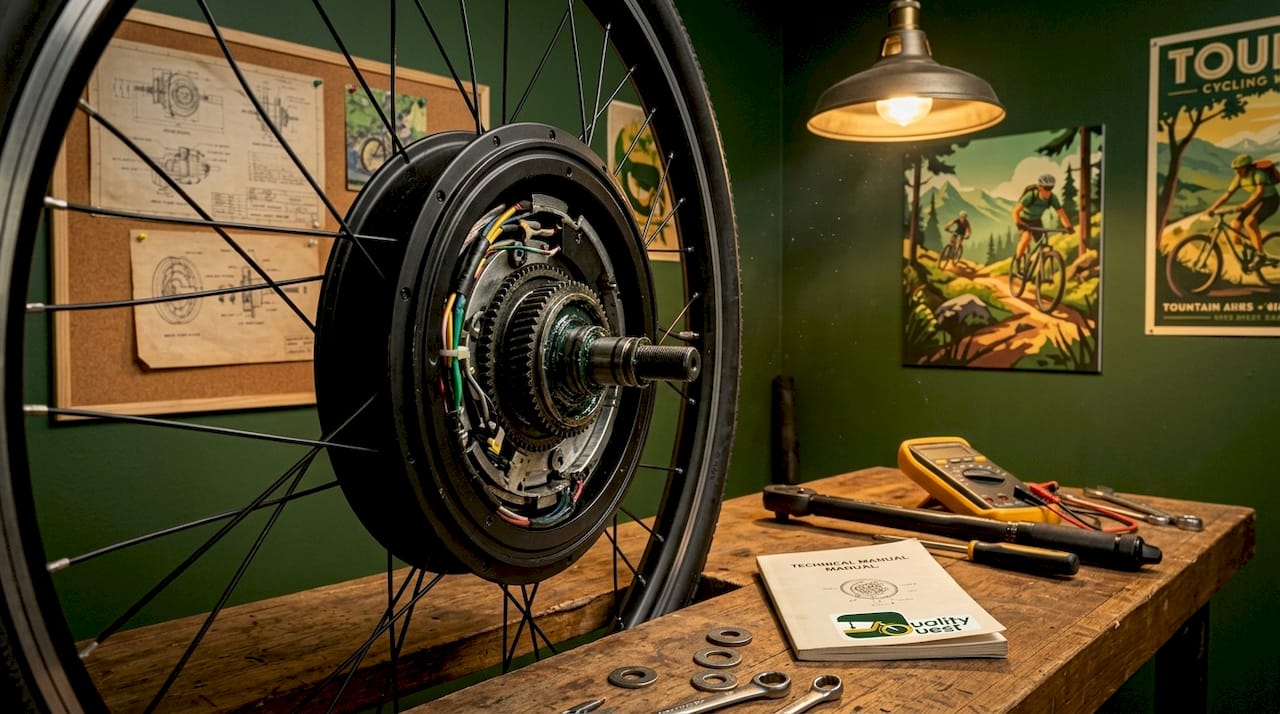
Battery and range: Lithium-ion battery packs are standard, usually 36V or 48V. A fully charged pack delivers anywhere from 20 to 60 miles of range depending on terrain, rider weight, and assist level.
Pedal assist and throttle: Pedal-assist modes let the motor kick in as you pedal, reducing effort without eliminating the exercise benefit. Many models also include a throttle for motor-only operation when you need a break.
Controls and display: A handlebar-mounted LCD panel shows speed, battery level, assist mode, and trip distance. Brakes are typically mechanical or hydraulic disc brakes for reliable stopping power.
Frame layouts:
Pro Tip: Before buying, confirm whether the model you want supports throttle-only operation from a standstill. Some models only engage the throttle once you are already pedaling, which changes the riding feel significantly.
The choice between an electric bike and an electric trike comes down to stability, cargo capacity, and how you plan to use the vehicle day to day.
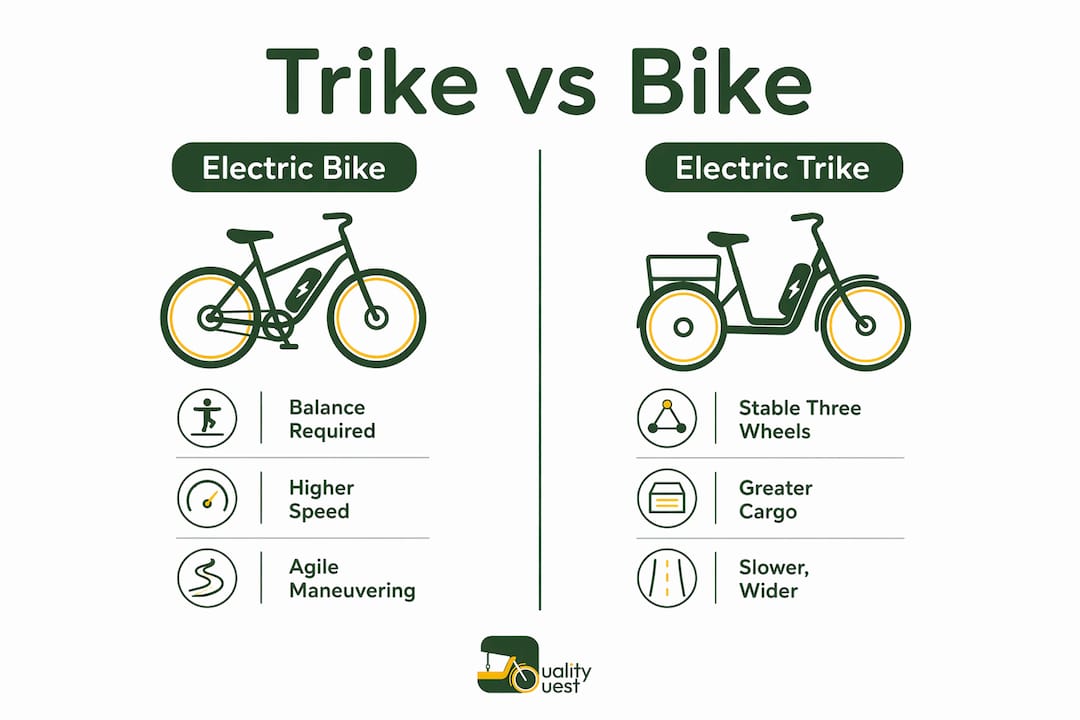
Stability: A two-wheel e-bike requires active balance, which is manageable for most riders but becomes a real barrier for seniors or anyone with joint or coordination challenges. Electric trikes stay upright on their own, removing that barrier entirely. You can stop at a red light without putting a foot down.
Cargo capacity: Electric trikes carry significantly more cargo than standard e-bikes. The rear platform or basket on a delta trike can hold groceries, tools, or packages that would require a dedicated cargo e-bike to manage on two wheels.
Speed and maneuverability: E-bikes are faster and more agile in tight urban spaces. Electric trikes are wider and slower to corner, but that tradeoff buys you a much more relaxed, confidence-inspiring ride.
Electric trikes vs mobility scooters: Mobility scooters are designed for very low speeds and flat surfaces, typically indoors or on smooth sidewalks. Electric trikes handle varied terrain, reach higher speeds, and give riders a more active, bike-like experience. For someone who wants to stay mobile outdoors without being limited to a scooter’s range or terrain capability, an electric trike is the stronger choice.
Pro Tip: If you are comparing electric trikes to mobility scooters for an older adult, check local regulations. In the U.S., three-wheeled vehicles may be classified as motorcycles in some states, which affects where you can legally ride.
The advantages of electric trikes go beyond novelty. Here are the most practical reasons riders choose them.
Riding an electric trike is straightforward, but it does require a short adjustment period if you are coming from two-wheel cycling.
Starting out: Power on the display, select your assist level (usually 1 through 5), and begin pedaling. The motor engages almost immediately, and you will feel the assist within the first pedal stroke. If your model has a throttle, you can also engage the motor without pedaling.
Cornering: This is the biggest adjustment. Electric trikes do not lean into turns the way a bicycle does. Entering a corner too fast can cause the inside wheel to lift. Slow down before the turn, then accelerate gently through it.
Controls overview:
Maintenance basics:
Pro Tip: Your first few rides should be in a parking lot or quiet street. Practice slow turns and get comfortable with the wider turning radius before taking the trike into traffic.
Electric trikes combine three-wheel stability with electric motor assistance, making them the most accessible form of powered cycling for adults who prioritize safety, cargo capacity, and comfort over speed.
| Point | Details |
|---|---|
| Core definition | An electric trike is a three-wheeled, motor-assisted vehicle available in delta and tadpole layouts. |
| Stability advantage | Three wheels stay upright without rider input, removing the balance barrier of two-wheel e-bikes. |
| Cargo and utility | Rear baskets and platforms make electric trikes practical for errands, commuting, and cargo hauling. |
| Cornering adjustment | Riders must slow before turns since electric trikes do not lean like bicycles. |
| Best fit | Electric trikes suit seniors, riders with mobility challenges, and anyone needing stable, eco-friendly transport. |
I have spent years watching the e-bike market grow, and electric trikes consistently get treated as the “beginner” or “elderly” option. That framing undersells them badly. The reality is that a well-built electric trike handles cargo, distance, and daily utility better than most two-wheel e-bikes at the same price point.
What genuinely excites me right now is the engineering progress happening at the higher end of the market. Addmotor’s U-750 tilting eTrike uses a dual-mode tilt system that lets the frame lean into corners while still providing three-wheel stability when stopped. That kind of design closes the gap between trike handling and bike handling in a way that was not possible five years ago.
My honest advice: if you are on the fence between an electric bike and an electric trike, think about what your actual daily ride looks like. If it involves stops, cargo, hills, or any hesitation about balance, the trike wins on every practical measure. The stigma is not worth letting it make the decision for you.
— Matt
At Qualityquestbikes, we carry a curated selection of electric trikes built for real-world use across the US and Canada. Whether you want a stable daily commuter or a cargo-ready model for errands, we have options that fit different budgets and riding styles.

The ECOTRIC 48V 750W White Electric Tricycle is one of our most popular picks for riders who want reliable motor power and a practical cargo basket right out of the box. If comfort and suspension are your priority, the Meet One Tour Lite delivers full suspension and a smooth ride on varied terrain. Browse our full electric trike lineup and reach out to our team. We are here to help you find the right fit with no pressure and no hidden costs.
Electric trikes are used for commuting, grocery runs, cargo hauling, recreational riding, and accessible transportation for seniors or riders with mobility challenges. Their stability and cargo capacity make them practical for everyday errands that would otherwise require a car.
Most consumer electric trikes reach top speeds of 15 to 20 mph on motor assist alone, with some performance models reaching up to 26 mph. Speed depends on motor wattage, rider weight, and terrain.
Licensing requirements vary by state. In the U.S., three-wheeled vehicles are sometimes classified as motorcycles, which may require a license or registration depending on your jurisdiction. Check your local DMV rules before riding on public roads.
Electric trikes reach higher speeds, handle rougher terrain, and provide a more active riding experience than mobility scooters. Mobility scooters are designed for very low speeds on smooth, flat surfaces, while electric trikes function more like bicycles with motor assistance.
Prioritize motor wattage, battery range, whether the model uses pedal assist, throttle, or both, and the frame layout that suits your riding style. Cargo capacity, seat comfort, and suspension quality are also worth comparing across models.



You deserve quality products at fair prices. Period.
Which is why we offer no sales tax and price matching
Orders include free shipping and are dispatched within 1 -2 business days.
Exceptions apply.

We want you to be enthusiastically satisfied with your order, have any questions?
Your support keeps our wheels rolling!
We’re more than just a store — we’re part of a growing local community of utility bike and trike enthusiasts who are passionate about creating positive change.
Subscribe and be the first to learn about our news and promotions

Your cart is empty